Log in to NELA Bridge Club
Get your personal results history, analysis of your performance, FIND A PARTNER, and more!

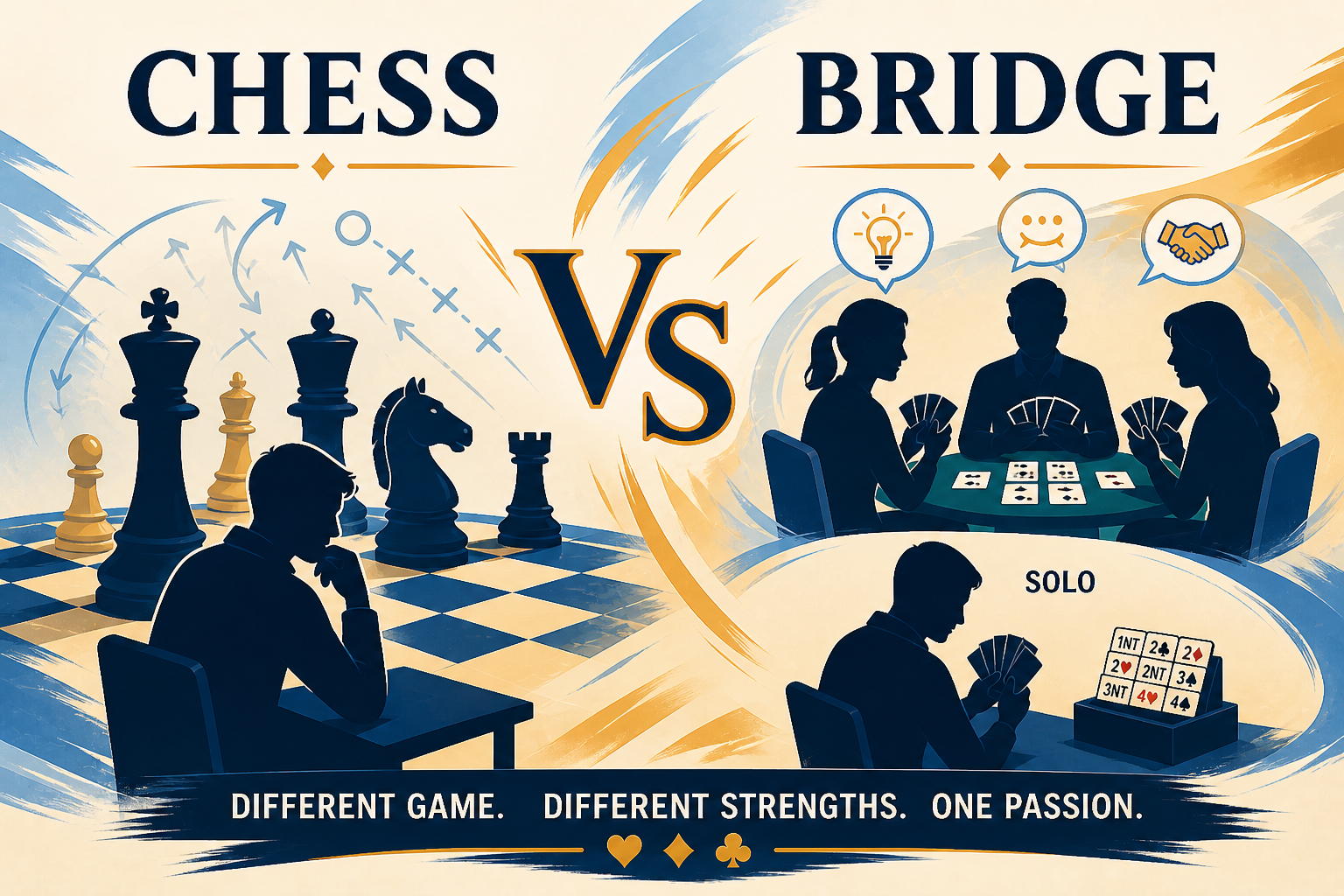
Bridge: The Chess Game of Cards
Bridge has been described as "the chess game of cards." Bridge takes the strategy you love in chess and adds something more—people. Instead of playing alone with all the information on the table, bridge challenges you to think, communicate, and work with a partner while solving problems with limited clues.
It’s social, dynamic, and never the same game twice, making it just as appealing to students building skills as it is to adults looking for a lifelong mental challenge. If chess sharpens your mind, then bridge sharpens your mind and your ability to connect with others.
There are clear similarities between the two games, as described in this blog post, "How Chess is Similar to Bridge Card Game?" while chess legends like Bobby Fischer would emphasize the differences—arguing that chess leans less on pure calculation and more on memorization. Bridge, however, offers a different kind of challenge: reasoning under uncertainty, partnership, and communication, where success depends on both logic and collaboration.
Perhaps, then, "chess is the bridge game of board games"? In the end, there’s no need to choose sides—chess and bridge complement each other well, each strengthening different skills and making you a more complete thinker.
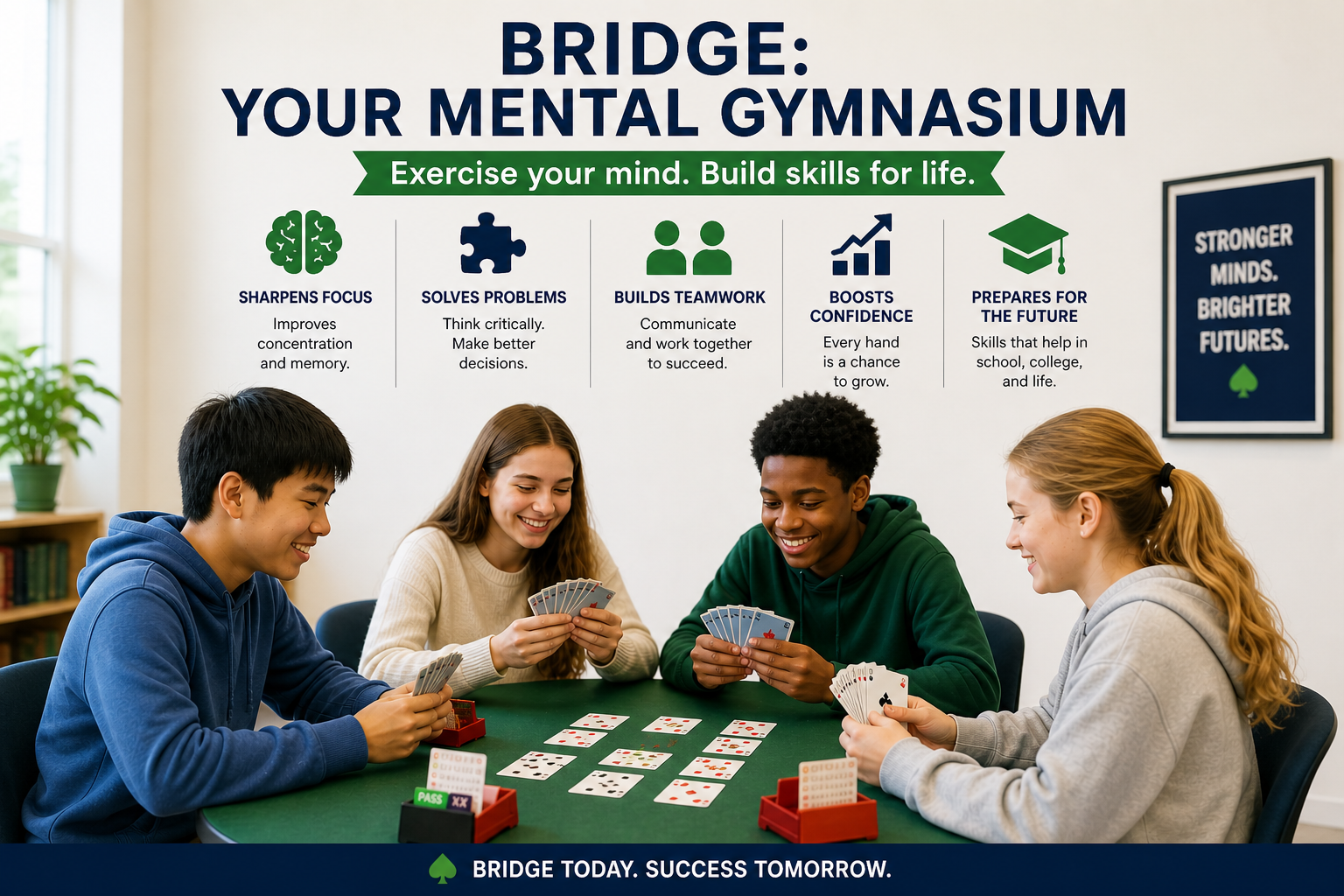
"Mental Gym"
Bridge is often described as a "mental gymnasium" that offers unique cognitive and social benefits for students. For more evidence, check out the following resources and research-backed points on students are taking up the game.
Benefits for Children and Teens
-
Academic Performance: Studies have shown that middle-school students who play bridge score significantly higher on standardized tests. In one study, bridge-playing students saw test score gains of 10% to 35% higher than their non-playing peers across subjects like math, science, and reading.
-
Cognitive Development: Bridge reinforces mathematical skills through card counting and probability. It also enhances working memory, pattern recognition, and strategic planning.
-
Social Skills: As a partnership game, bridge is a powerful tool for teaching teamwork, cooperation, and patience. It helps youth build bonds that extend beyond the table and teaches them how to handle both winning and losing with sportsmanship.
Inspirational Figures and Media
Is your interest piqued?
-
Warren Buffett: An avid player who frequently champions the game for its intellectual stimulation
-
Martina Navratilova: Tennis legend calls bridge a "cerebral sport" that teaches concentration and reasoning
-
Even Snoopy from the Peanuts comic strip is a bridge player
Recommended Links
- Reasons Students Should Learn to Play Bridge - an excellent summary for beginners
- ACBL Video Library - includes a "Bridge BFF" series and "Tutorial 1|Intro" specifically for beginners
- Silicon Valley Youth Bridge-Benefits - detailed data on how bridge affects standardized test scores
- AARP: Bridge for Brain Health - a great article for parents about the lifelong cognitive benefits of the game
References
- American Contract Bridge League (ACBL). Video Library. https://www.acbl.org/video-library/
- Bridgebum. "Famous Bridge Players: Warren Buffet, Bill Gates, Omar sharif" https://www.bridgebum.com/bridge_players.php
- Bridge Champ (2025). "Cognitive benefits of playing bridge: What the research reveals" https://bridgechamp.com/blog/bridge-cognitive-benefits/
- Great Brink Links. "Reasons students should learn to play bridge" https://greatbridgelinks.com/reasons-students-should-learn-to-play-bridge/
- Silicon Valley Youth Bridge. "Bridge Benefits" https://siliconvalleyyouthbridge.org/bridge-benefits/